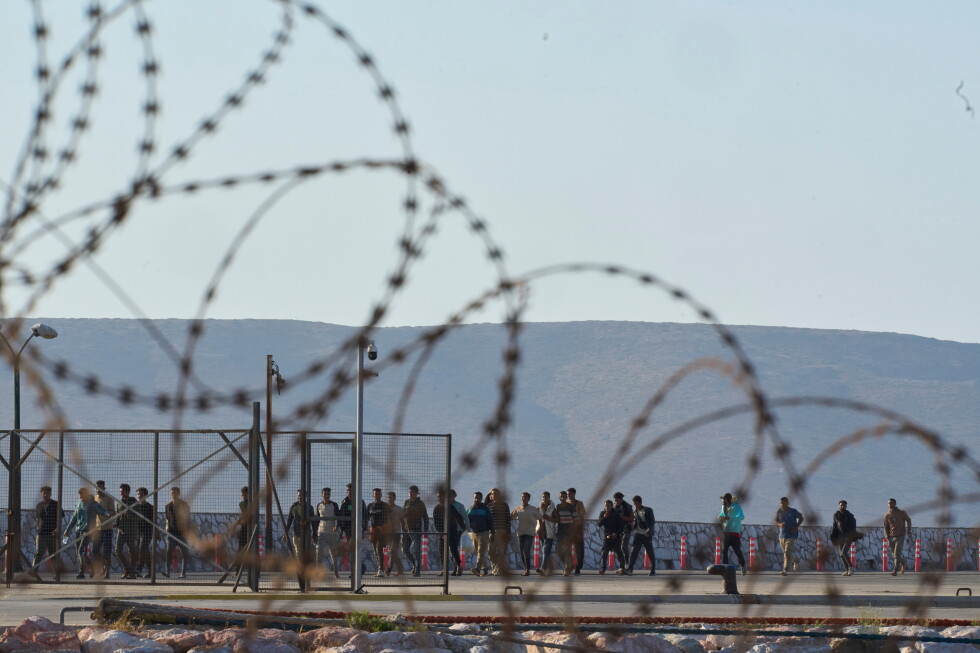
UNHCR counts 117.8 million displaced people as returns rise
UNHCR's Global Trends report says 117.8 million people were forcibly displaced at the end of 2025, a rare fall after a decade of growth but still a scale the agency describes as exceptionally high. The UNHCR report says the total includes 41.6 million refugees, 9 million asylum-seekers and 68.7 million people displaced within their own countries by conflict or violence. It attributes the decline partly to 4.36 million refugee returns and 10.31 million internally displaced people returning home, while warning that many returns took place in fragile or unsafe conditions. The Associated Press account of the report adds that Lebanon and Iran had already generated major new displacement in 2026, meaning the year-end fall does not point to a calmer global environment. For Belgium and the EU, the figures land as the EU's new Migration and Asylum Pact begins application, testing whether faster procedures can coexist with protection duties.
For Belgian residents, the story is not abstract demography: it shapes asylum reception, local integration, school enrolment, healthcare access and federal migration budgets. Fedasil and the Belgian asylum authorities face the practical effects when conflicts in Sudan, Syria, Afghanistan, Lebanon or elsewhere turn into protection claims. EU institution staff and policy-focused readers in Brussels should also read the figures against the European Commission's new asylum system, which promises faster procedures and solidarity while global protection needs remain historically large.
UNHCR (United Nations refugee agency, founded in 1950 and based in Geneva) compiles the annual Global Trends report on forced displacement. Barham Salih (UN High Commissioner for Refugees since 2026 and former Iraqi president) is the agency head quoted in the report cycle. Tarek Abou Chabake (UNHCR chief statistician) explains the statistical drivers behind the fall. Lebanon (eastern Mediterranean state bordering Israel and Syria) is facing renewed war-linked displacement. Hezbollah (Lebanese Shia movement and armed group backed by Iran) is central to Lebanon's conflict with Israel. Sudan (north-east African state in civil war since April 2023), Syria (Middle Eastern state where war began in 2011) and Afghanistan (Taliban-ruled state since 2021) dominate recent return flows. Fedasil (Belgium's federal reception agency for asylum seekers) is the Belgian institution most directly exposed when global displacement becomes asylum pressure in Belgium.
Background
UNHCR's annual series shows how forced displacement moved from a severe but smaller post-Cold War issue into a structural global crisis after Syria's 2011 war, Russia's 2022 full-scale invasion of Ukraine and Sudan's 2023 civil war. The UNHCR page says one in every 70 people worldwide is now forcibly displaced. Europe last faced a comparable asylum-policy shock in 2015, when arrivals through the Mediterranean exposed the weakness of the Dublin system. The EU approved the Migration and Asylum Pact in 2024 and brought it into application in June 2026.
The wider picture
Forced displacement is now one of the clearest human indicators of geopolitical fragmentation. Wars in Sudan, Syria, Ukraine, Afghanistan and Lebanon show how state collapse, proxy conflict and regional escalation push civilians into long exile. The numbers also expose a burden imbalance: many refugees remain in neighbouring or lower-income countries, while wealthy states debate smaller but politically charged asylum flows.
Why now
UNHCR released its 2025 Global Trends report on 11 June 2026, one day before the EU's new asylum pact entered application. The timing makes the displacement figures a direct stress test for Europe's promise of faster, common procedures.
What to watch
Watch UNHCR's mid-year 2026 update, EU Commission implementation reports on the pact, Belgium's reception-capacity decisions and any EU negotiations on return hubs. Lebanon and Sudan are key signals because renewed escalation could quickly erase the statistical fall recorded for 2025.
Impact
Regional — The EU level matters because the European Commission says the Migration and Asylum Pact now sets common rules on screening, Eurodac, border procedures, solidarity and responsibility. The Belgian federal level matters because Fedasil, the asylum administration and the migration minister must translate those pressures into reception capacity, return policy and case handling. Flanders, Wallonia and Brussels feel effects through reception centres, local public social welfare centres, schools, language courses and municipalities, but the legal responsibility remains primarily federal and EU-level rather than regional.
Opposing perspectives
- UNHCR / humanitarian agencies
UNHCR's report frames the decline as fragile rather than reassuring: returns rose, but many people went back to countries where security, services and livelihoods remain weak. This view puts priority on durable solutions, host-country investment and legal pathways, not only on reducing arrival numbers.
- European Commission / EU migration officials
The European Commission argues that the new pact gives member states common rules, stronger external-border procedures and a permanent solidarity framework. In this reading, high displacement makes coordinated EU management more necessary, because fragmented national systems cannot handle pressure fairly or predictably.
- Human rights organisations
Human Rights Watch and other rights advocates, cited in coverage of the pact's launch, argue that accelerated border procedures and detention risks can weaken access to fair asylum hearings. Their strongest case is that speed and deterrence may become substitutes for protection when displacement remains historically high.
- Belgian federal migration hardliners
Belgium's migration minister has argued that Belgium should reduce inflows, speed up returns and reserve reception for people most clearly in need. This frame treats global displacement as a reason to make Belgium less attractive for secondary movements, not as a reason to expand reception indefinitely.
Sources & evidence
- Al Jazeera - Lebanon war victims among 117M people displaced worldwide · 2026-06-13
- UNHCR - Global Trends 2025 · 2026-06-11
- Associated Press - Nearly 118 million people were displaced by conflict and persecution last year, UN says · 2026-06-11
- European Commission - Pact on Migration and Asylum · 2026-06-12
- Internal Displacement Monitoring Centre - 2026 Global Report on Internal Displacement · 2026-05-12
- Le Monde - Belgium's migration minister advocates for the strictest policy ever implemented · 2025-07-12
- Associated Press - What to know about the EU's updated rules for migration and asylum · 2026-06-12