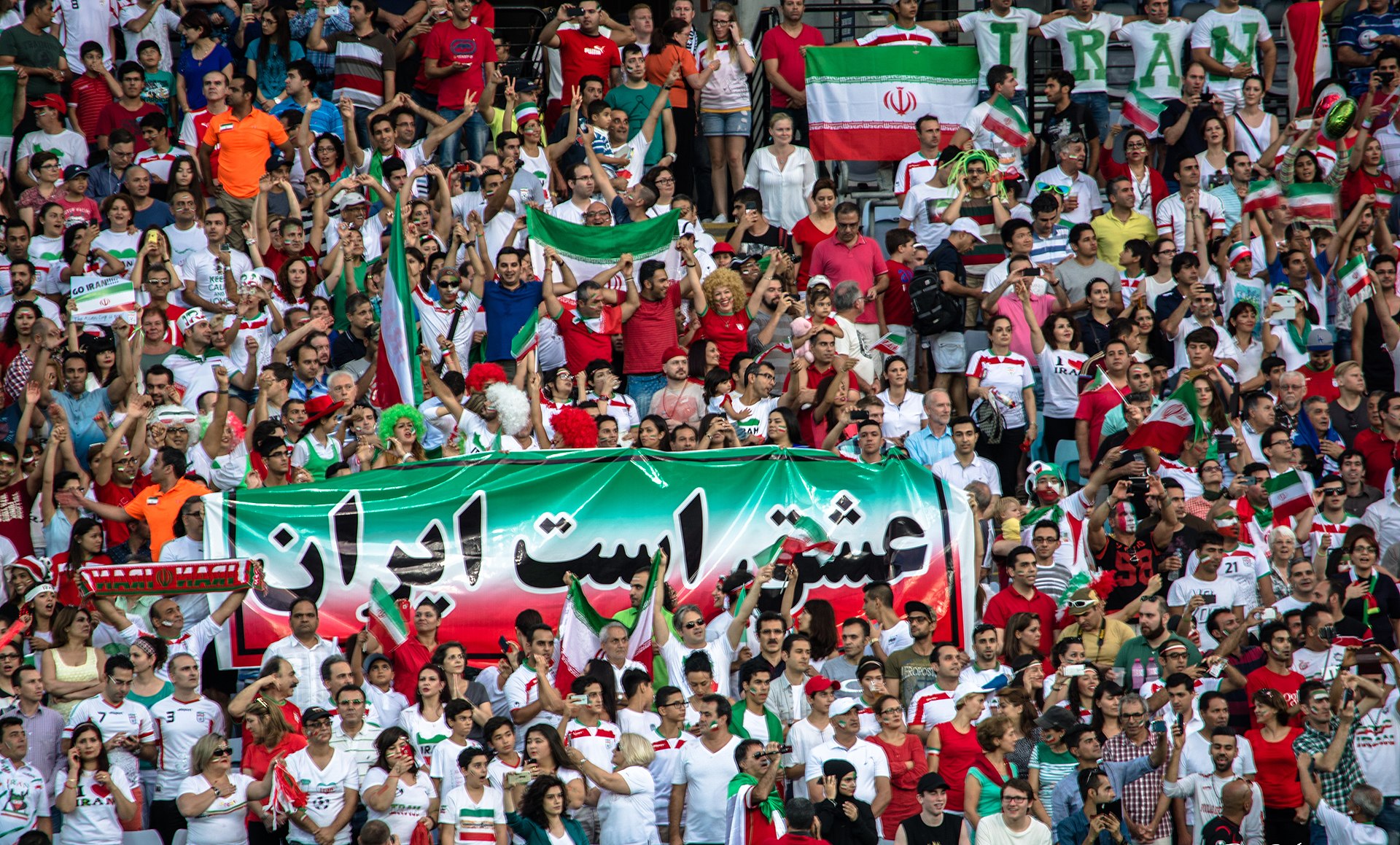
US entry rules sideline Iran fans before Belgium World Cup match
Iran’s World Cup campaign has become a test of how far a host-country security policy can shape a global football tournament. The Iranian Football Federation says its official ticket allocation for Group G matches in the United States has been withdrawn, while FIFA says it is working with the federation on compliant ways for Iranian supporters to attend. U.S. officials say Iran’s players and necessary staff have received visas, but some other applicants linked to the delegation were refused. FIFA’s match schedule places Iran against New Zealand on June 15, Belgium on June 21 and Egypt on June 26, with the Belgium match in Inglewood near Los Angeles. For the Red Devils, the sporting question is simple: Group G points. Around the game, however, Iran’s fans, team base in Tijuana and U.S. travel restrictions have turned Belgium’s second group match into one of the tournament’s most politically charged fixtures.
Belgian football supporters, broadcasters and travelling fans now face a Belgium-Iran match shaped by crowd imbalance and security politics, not only tactics. The Belgian Football Association and the Red Devils have no control over U.S. visa policy, but FIFA’s match schedule puts Belgium directly inside the dispute. For Belgian viewers, the issue is also a preview of how the expanded World Cup can affect fairness when host-country entry rules limit which supporters, officials and journalists can attend.
Iran (Islamic Republic in West Asia, under U.S. travel restrictions since 2025) qualified for its seventh men’s World Cup. FIFA (Zurich-based world football governing body, founded in 1904) runs the tournament and controls World Cup ticketing. The Football Federation Islamic Republic of Iran (Iran’s national football federation, known as FFIRI) represents Iran in FIFA matters. Belgium’s Red Devils (Belgium men’s national football team) face Iran in Group G. Group G (World Cup first-round group) also includes Egypt and New Zealand. Inglewood (Los Angeles County city) hosts the Belgium-Iran match at the Los Angeles Stadium site. Tijuana (Mexican border city opposite California) is Iran’s relocated base. The U.S. State Department (federal foreign-affairs ministry) oversees visas. The White House FIFA task force (U.S. federal coordination body for the 2026 tournament) is represented publicly by Andrew Giuliani. The Islamic Revolutionary Guard Corps (Iranian military-political force designated by the U.S. as a terrorist organisation) is central to U.S. vetting concerns.
Background
FIFA’s 2018 award of the 2026 World Cup to the United States, Canada and Mexico already carried a migration-policy question because Donald Trump’s first-term travel bans had raised concerns during the bid. FIFA president Gianni Infantino said in 2017 that qualified teams, officials and supporters needed host-country access. The 1998 United States-Iran World Cup match in Lyon became a rare diplomatic image, with players exchanging flowers before Iran’s 2-1 win. By 2022, Iran’s matches in Qatar were again politically charged, with protests around the national team and the Iranian state.
The wider picture
The broader issue is the collision between global sport and hard borders. The United States is co-hosting a tournament built on universal participation while applying security and sanctions policy to a country with which it has acute diplomatic and military tensions. FIFA can control schedules and tickets, but it cannot override a sovereign state’s entry decisions.
Why now
The story is timely because the World Cup has started and Iran’s first U.S.-based group match is days away. The Iranian Football Federation’s ticket claim and the U.S. visa approvals for players have turned a long-running policy issue into an immediate tournament problem.
What to watch
Watch whether FIFA announces a concrete ticketing mechanism for Iranian supporters before June 15, whether Iran’s delegation enters the United States without further disruption, and whether Belgium’s June 21 match in Inglewood proceeds with unusual security measures or visible protest activity.
Opposing perspectives
- Football Federation Islamic Republic of Iran
The Iranian Football Federation says the withdrawal of its official ticket allocation turns a sporting event into a political contest and denies Iranian supporters the same access mechanism other federations receive. Its strongest argument is competitive fairness: if Group G rivals can organise support through FIFA channels, Iran should not be uniquely deprived of that route.
- U.S. government / White House FIFA task force
U.S. officials say the host country is balancing tournament access with national-security screening. Their strongest argument is that players and necessary support staff can enter for matches, while people considered outside that essential sporting category or linked to U.S. security concerns do not receive the same access.
- FIFA tournament organisers
FIFA says it is seeking compliant solutions for Iranian supporters, which frames the dispute as an operational problem constrained by host-country law and sanctions rather than a purely sporting decision. Its strongest position is that it must keep the tournament running while respecting the legal environment in the host state.
Sources & evidence
- Al Jazeera - Video: What Iran’s football fans think about the World Cup · 2026-06-12
- AP News - Iran soccer body claims fans’ tickets for World Cup games in the US have been revoked · 2026-06-09
- AP News - Iran’s World Cup team approved for visas to play games in the US, officials say · 2026-06-06
- The Guardian - World Cup 2026 visa chaos: from referee Omar Artan to Iranian officials · 2026-06-09
- Axios - Iran faces Trump’s World Cup gauntlet · 2026-06-07
- FIFA - FIFA World Cup 26 match schedule
- Federal Register - Proclamation 10949, Restricting the Entry of Foreign Nationals · 2025-06-10
- FourFourTwo - Iran furious at integrity of World Cup 2026 planning after latest allocation withdrawal · 2026-06-09