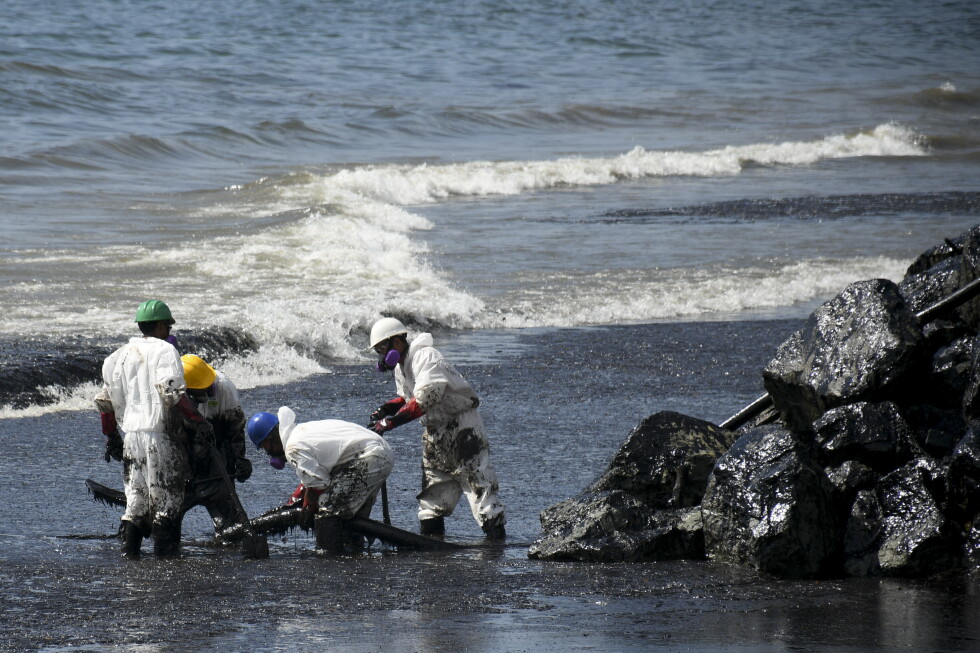
Venezuela demands Trinidad act over alleged Gulf of Paria oil spill
Venezuela's foreign ministry said on Friday that an alleged oil spill from Trinidad and Tobago had reached Venezuelan shores, threatening marine ecosystems, fishing activity and coastal communities. The ministry said satellite imagery confirmed the spill, but it did not specify the affected locations or the volume of oil. Trinidad and Tobago's Energy Minister Roodal Moonilal said the Air Guard and Coast Guard had been deployed for sea and drone reconnaissance, and that Port of Spain had asked Venezuela for coordinates and more information through diplomatic channels. The dispute matters beyond the immediate slick because the Gulf of Paria is a shared, hydrocarbon-rich waterway and relations were already strained by Trinidad and Tobago's closer alignment with Washington after Nicolas Maduro's January capture. The allegation also follows a February 2024 tanker incident near Tobago that sent pollution across Caribbean waters.
For Belgian and EU readers, the direct issue is not a Belgian spill but a test of how small energy-producing states handle cross-border environmental claims in politically tense waters. Belgian port, shipping, insurance, energy and environmental-policy readers will recognise the same questions that shape EU maritime practice: satellite evidence, rapid disclosure, liability, fisheries protection and state-to-state cooperation. The case also matters for policy-engaged readers following Caribbean stability, Venezuelan politics and non-Russian energy supply options in a volatile global market.
The Gulf of Paria (semi-enclosed sea between Trinidad and Venezuela) is a shared fishing and energy zone. Trinidad and Tobago (Caribbean state 10km from Venezuela at the closest point) is a major regional oil and gas producer. Venezuela's foreign ministry (Caracas-based diplomatic authority) is leading the complaint. Port of Spain (Trinidad and Tobago's capital) is handling the response through energy and foreign-ministry channels. Roodal Moonilal (Trinidad and Tobago energy minister since 2025) said patrol aircraft, coastguard assets and drones were deployed. Kamla Persad-Bissessar (Trinidad and Tobago prime minister, returned to office in 2025) has taken a harder line on Venezuelan migration and US ties. Nicolas Maduro (former Venezuelan president, removed from power in January 2026 according to the lead report's regional context) remains central to regional tensions. Sucre and Delta Amacuro (Venezuelan coastal states named in the May dispute) border sensitive wetlands and fisheries.
Background
The closest precedent is the February 2024 Tobago spill, when Trinidad and Tobago's then prime minister Keith Rowley declared a national emergency after an overturned barge polluted Tobago's southwest coast. AP reported at the time that the owner and cause were unclear, while officials warned of tourism and fisheries damage. In May 2026, Venezuela's foreign ministry made a separate complaint that a spill from Trinidad and Tobago threatened Sucre, Delta Amacuro and the Gulf of Paria; Trinidad and Tobago's government disputed the scale, saying only 10 barrels had spilled and that the incident was contained on May 1.
The wider picture
The spill allegation lands amid a wider deterioration in Venezuela-Trinidad relations. The lead report says Trinidad and Tobago's government supported US actions linked to Nicolas Maduro's January capture, while Port of Spain has also toughened its approach to Venezuelan migration. In that setting, even a technical environmental dispute can become part of a broader contest over sovereignty, energy and alignment with Washington.
Why now
The immediate trigger is Venezuela's Friday statement claiming satellite confirmation of a spill that it says reached its shores. Trinidad and Tobago's response shifted the issue from accusation to verification by deploying reconnaissance assets and asking for coordinates.
What to watch
Watch whether Venezuela releases coordinates, imagery or sampling data; whether Trinidad and Tobago confirms any slick after reconnaissance; and whether either government requests technical assistance or opens a joint inquiry. A quantified spill volume would be the key signal.
Opposing perspectives
- Venezuela's foreign ministry
The ministry frames the alleged spill as an environmental and economic threat to marine ecosystems, fishing activity and coastal communities. Its strongest argument is that a shared waterway requires transparency over causes, scope and consequences, and that Trinidad and Tobago should take immediate preventive measures before damage spreads or becomes harder to document.
- Trinidad and Tobago government
Port of Spain's strongest position is that Venezuela has made a serious claim without providing enough operational detail for verification. Roodal Moonilal said air, coastguard and drone reconnaissance had been deployed and that Venezuela had been asked for coordinates, making evidence-sharing the first step before accepting liability or scale.
Sources & evidence
- Al Jazeera: Venezuela hits out at Trinidad and Tobago in oil spill spat · 2026-06-12
- Associated Press: Venezuela warns of serious environmental impact from alleged oil spill in Trinidad and Tobago · 2026-05-10
- Associated Press: An offshore oil spill has caused a national emergency, Trinidad and Tobago prime minister says · 2024-02-12
- The Guardian: Trinidad and Tobago says oil spill from mystery vessel is national emergency · 2024-02-12
- International Maritime Organization: International Convention on Oil Pollution Preparedness, Response and Co-operation
- Buskey, White and Esbaugh 2016, Oceanography: Impact of Oil Spills on Marine Life in the Gulf of Mexico · 2016-08-22