What do the Thier-à-Liège mobility works change for daily travel?
Two major soft-mobility works in Thier-à-Liège are reported to be reaching completion, a local change with wider significance for Liège’s shift from isolated road upgrades to a connected walking, cycling and public-transport network. For residents of the northern heights, the immediate question is practical: which routes become safer or easier for school runs, local shopping, bus connections and trips toward the city centre? For Liège as a whole, the works land at a moment when the new tram has already changed the east-west and north-south logic of travel, while Walloon and EU institutions are pushing cities to treat cycling and walking as ordinary transport, not leisure add-ons. Belgium-based readers should see the Thier-à-Liège chantiers majeurs achevent story as one small but concrete test of that policy language: does mobilité douce make a hilly, residential district more usable, or simply add another fragment to a still uneven network?
For people living in or crossing Thier-à-Liège, the practical effect is not abstract climate policy. It is whether a child can walk a safer route to school, whether a cyclist can avoid a hostile climb, whether a bus stop is easier to reach, and whether short local trips need a car. For Liège, the works also test whether the tram-era mobility shift reaches neighbourhoods beyond the central corridor. For EU staff, expats and commuters who follow Belgian urban policy, this is a useful local example of how European active-mobility goals are implemented street by street.
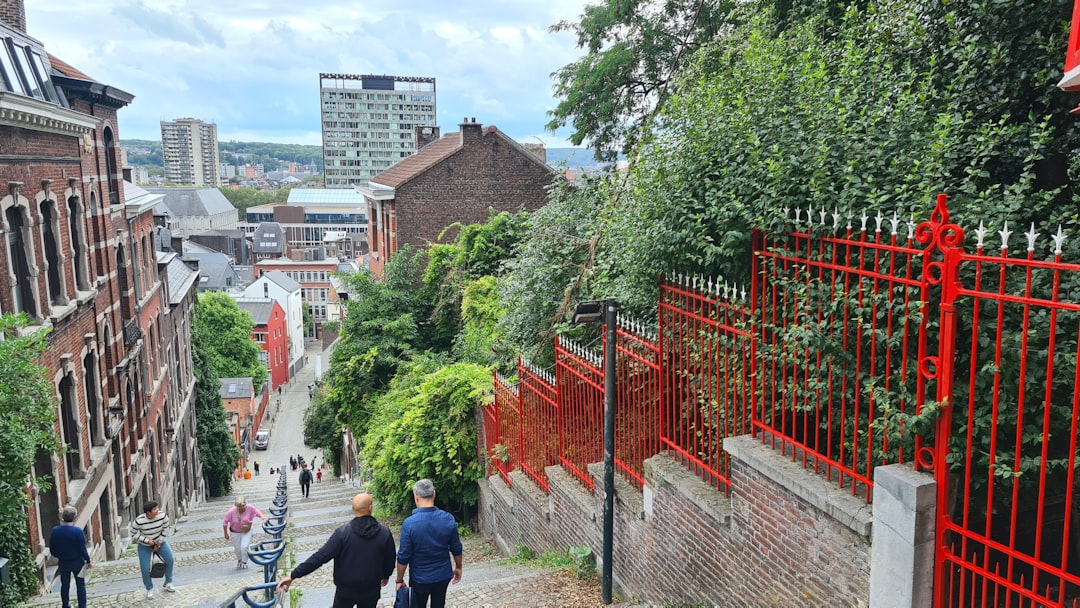
Thier-à-Liège is a residential district on the northern heights of the City of Liège, near Sainte-Walburge and green areas such as Parc Walthère Dewé. The reported completion of two major soft-mobility works concerns local infrastructure for non-car movement, principally walking and cycling, in a part of the city where slopes, traffic speeds and links to public transport matter as much as painted routes. Named stakeholders include the City of Liège, SPW Mobilité et Infrastructures, TEC, GRACQ Liège, Pro Velo Liège and residents of Thier-à-Liège, Sainte-Walburge and nearby Herstal-facing routes.
Background
Liège’s mobility story is shaped by industrial-era urban form, steep neighbourhoods, dense car traffic and decades without a tram after the old network disappeared in 1967. The modern tram, opened in 2025, restored rail-based urban transit along the main corridor, but many hillside districts still depend on buses, walking links, cycling shortcuts and local road redesigns. Soft mobility in Thier-à-Liège therefore sits inside a longer question: how far the city’s mobility transition can extend beyond the Meuse valley and central redevelopment zones.
Impact
Regional — The impact is primarily Walloon and local. In Liège, the works add to a broader mobility transition shaped by the tram, municipal cycling measures, Walloon road competences and pressure from user groups for safer continuous routes. The strongest effect will be felt by residents, school communities, cyclists, pedestrians and local businesses in Thier-à-Liège and neighbouring northern districts.
Opposing perspectives
- City and EU active-mobility planners
The institutional view treats projects such as the Thier-à-Liège works as part of a wider shift in urban transport. EU institutions describe cycling as a “fully fledged mode of transport”, while local authorities use the language of mobilité douce to link safety, access and lower car dependency. In this framing, the key test is integration: walking and cycling links should connect with buses, the tram and neighbourhood services.
- Cyclist and pedestrian user groups in Liège
GRACQ and everyday users tend to judge the same works by lived continuity, not policy vocabulary. The association’s barometer has described cyclists’ feeling in Liège as still negative, with users asking for safer, complete routes rather than isolated improvements. From this perspective, two completed chantiers matter only if they remove real conflict points for children, older residents, commuters and less confident cyclists.
- Residents and local businesses in Thier-à-Liège
For residents, the practical balance can differ from the official mobility narrative. Safer walking and cycling routes are welcome when they improve daily errands and access to schools, but construction periods, changed traffic habits, parking pressure and delivery access can cause frustration. The local question is whether the finished works make the district calmer without simply moving inconvenience onto nearby streets.
Sources & evidence
- DH Les Sports+ - Mobilité douce au Thier-à-Liège : 2 chantiers majeurs s’achèvent · 2026-06-16
- European Commission - European Declaration on Cycling adopted · 2024-04-03
- European Commission - EU Urban Mobility Framework · 2021-12-14
- GRACQ - Baromètre cyclable 2021 : une évolution trop timide · 2022-03-23
- TEC - La date de mise en service du nouveau réseau est fixée au 28 avril 2025 · 2025-03-25
- Ville de Liège - Mobilité