WHO warns Ebola is spreading across eastern DRC camps
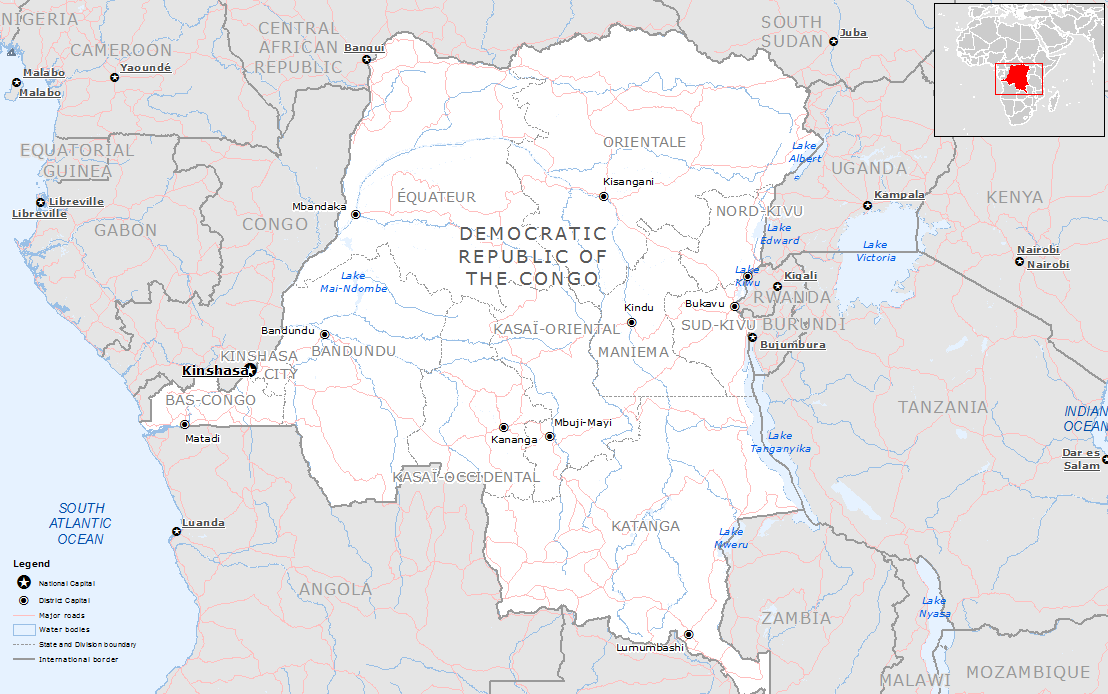
WHO figures cited by health agencies put the eastern Democratic Republic of the Congo outbreak at 676 confirmed Ebola cases, 136 deaths and 119 suspected cases since the DRC declared the outbreak on 15 May 2026. The outbreak is caused by Bundibugyo virus, a rarer Ebola species for which the World Health Organization says no approved vaccine or specific treatment is available. The immediate concern is geographic spread: WHO epidemiology officials say new health zones in Ituri, North Kivu and South Kivu are detecting cases, while the UN refugee agency has confirmed Ebola-related deaths in Kpanga displacement camp. For Belgium, the main connection is not direct domestic danger but global health preparedness: the European Commission says EU funds, supplies and air-bridge logistics are now part of the response, and Belgium’s Congolese communities and travel-medicine services will follow the outbreak closely.
The outbreak mainly affects people in eastern DRC and Uganda, but it also matters to Belgian residents with family, work or humanitarian links to the Great Lakes region. Belgium’s travel clinics, hospitals, NGOs, diaspora organisations and federal public-health officials may face more advice requests, repatriation questions and misinformation risks. The European Commission says EU funding is already supporting surveillance, protective equipment, diagnostics and logistics, making this a concrete EU health-security file rather than a distant foreign-health story.
The Democratic Republic of the Congo (central African state and former Belgian colony, independent since 1960) has recorded repeated Ebola outbreaks since the virus was first identified there in 1976. Ituri (north-eastern DRC province bordering Uganda and South Sudan) is the outbreak centre. North Kivu and South Kivu (eastern DRC provinces affected by armed conflict and displacement) have also reported cases. Kpanga displacement camp (camp for people uprooted by conflict in Ituri) is now part of the emergency. Bundibugyo virus (Ebola species first identified in Uganda’s Bundibugyo District in 2007) is less studied than Zaire ebolavirus. The World Health Organization (UN health agency, founded in 1948) coordinates international health alerts. UNHCR (UN refugee agency, created in 1950) supports displaced people and refugees. Africa CDC (African Union public-health agency, launched in 2017) coordinates continental disease response. Hadja Lahbib (Belgian EU commissioner for preparedness and crisis management since 2024) announced additional EU support.
Background
WHO historical outbreak records and virology studies identify the DRC as the place where Ebola was first recognised in 1976 near Yambuku. The 2013-2016 West Africa epidemic became the largest recorded Ebola crisis, while the 2018-2020 eastern DRC Kivu epidemic showed how conflict, mistrust and mobility can prolong response operations. Research by Towner and colleagues in 2008 described Bundibugyo virus after the 2007 Uganda outbreak. CDC-linked research by MacNeil and colleagues later estimated substantial fatality in that outbreak, underscoring why a Bundibugyo resurgence is harder to manage without licensed strain-specific tools.
The wider picture
The outbreak sits inside the wider Great Lakes security crisis, where armed groups, displacement, mining routes and weak state control complicate health operations. It also tests post-pandemic global health politics: whether wealthy states fund response capacity abroad or retreat into border measures. For Europe, the file blends humanitarian responsibility, health security and relations with African institutions.
Why now
The story is timely because WHO officials now describe near-daily detection in new health zones, and UNHCR has confirmed deaths in a displacement camp. That suggests the outbreak is no longer confined to earlier hotspots and may be entering harder-to-control settings.
What to watch
Watch for WHO and Africa CDC updates on confirmed cases, deaths, affected health zones and Uganda-linked transmission. Also watch whether the EU’s added €16.5 million package clears budgetary approval, whether isolation-bed capacity expands, and whether vaccine candidates move from development timelines into field trials.
Opposing perspectives
- WHO and EU health-security officials
WHO and EU officials frame rapid support at the source as the least harmful and most effective response. The European Commission says surveillance, diagnostics, protective equipment, WHO coordination and air-bridge logistics reduce risks for affected communities and for Europe without turning the outbreak into a border-control story.
- Humanitarian medical responders in eastern DRC
Humanitarian responders argue that the decisive bottlenecks are local: isolation beds, contact tracing, community trust, safe burials and access in conflict zones. Their strongest case is that travel restrictions or distant political signalling do little if responders cannot safely find, isolate and care for patients in Ituri and the Kivus.
- US public-health restriction advocates
US officials cited in public debate argue that temporary entry restrictions from affected countries are justified to protect domestic health systems and quarantine capacity. Their position treats Ebola importation as a preventable public-health risk, even though many global-health experts argue such measures can deter cooperation and aid deployment.
Sources & evidence
- Al Jazeera - Alarm as Ebola spreads into new areas of DR Congo · 2026-06-12
- European Commission DG ECHO - EU increases support to contain Ebola outbreak · 2026-06-09
- European Commission DG ECHO - EU and WHO scale up action to respond to the Ebola outbreak in DRC and Uganda · 2026-05-29
- World Health Organization - Ebola disease fact sheet
- The Guardian - Every health facility said they were full: alarm over rapid spread of Ebola in DRC · 2026-05-23
- Le Monde - Why the Ebola surge in the DRC is alarming international health authorities · 2026-05-19
- El Pais - El ebola circulo mas de un mes en el noreste del Congo antes de ser identificado · 2026-05-18
- Jonathan S. Towner et al., Newly Discovered Ebola Virus Associated with Hemorrhagic Fever Outbreak in Uganda, PLOS Patho · 2008-11-21
- A. MacNeil et al., Proportion of Deaths and Clinical Features in Bundibugyo Ebola Virus Infection, Uganda, Emerging Infe · 2010-12-01