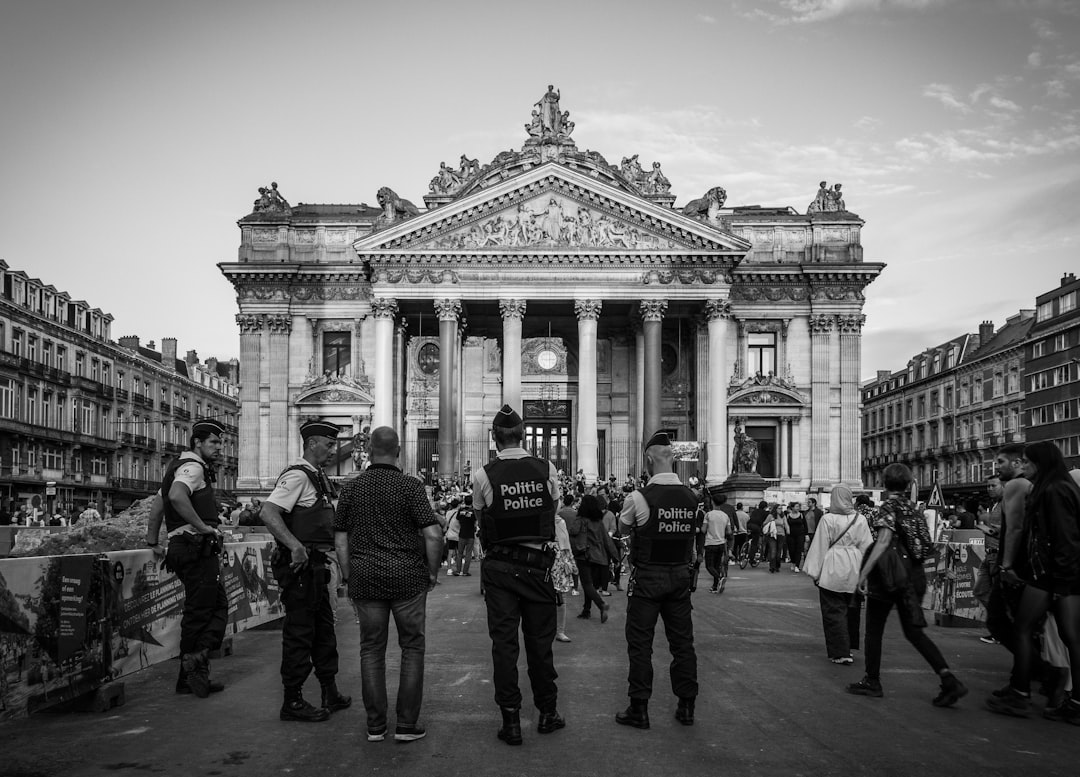
Why did students clash with police in Brussels over education budget cuts?
Students protesting education budget cuts and reform plans clashed with police in central Brussels, according to Politico, turning a budget dispute inside the French-speaking Community into a public-order flashpoint in the capital. The core issue is not federal education policy: most education powers sit with Belgium’s language Communities. In this case the pressure is on the Fédération Wallonie-Bruxelles government led by Minister-President Élisabeth Degryse, whose MR-Les Engagés majority is managing the 2024-2029 legislative term under tight budget constraints. For students, the practical question is whether savings will mean fewer course options, higher indirect costs, larger classes or weaker support services. For the government, the question is how to repair public finances without letting education spending continue to outrun available resources.
For students and families, the dispute is immediately practical: education budget cuts can affect access, timetables, grants, staff workloads, mental-health support, course availability and the quality of teaching conditions. For teachers, lecturers and administrators, it raises workload and job-security questions. For Brussels residents and commuters, the visible issue is public order when a protest becomes a police operation in the city centre. Politically, the clash tests the MR-Les Engagés majority early in the 2024-2029 cycle: education is one of the most sensitive areas of Belgian federalism because it is both a major budget line and a core equality issue.
The true subject is a Belgian regional-community budget conflict that surfaced in Brussels. The protest concerns education budget cuts and reforms linked to the Fédération Wallonie-Bruxelles, the French-speaking Community authority responsible for education, culture and related research competences for French-speaking institutions in Wallonia and Brussels. The named political centre is Minister-President Élisabeth Degryse, who also holds the Budget and Higher Education portfolio, and First Vice-President Valérie Glatigny, Minister of Education and Adult Education. The federal government is not the primary decision-maker on school and higher-education budgets, although federal taxation, social security and wider austerity politics shape the fiscal climate. Brussels is the stage because the Community institutions and many student organisations are concentrated there.
Background
Belgium’s education politics cannot be read as a normal national-ministry dispute. Since the state reforms, education has largely belonged to the Communities: the Flemish Community, the French Community known politically as the Fédération Wallonie-Bruxelles, and the German-speaking Community. Belgium.be states that Communities have powers over education, culture, language use and person-related matters. That institutional design grew from language conflict and the long effort to give Dutch-, French- and German-speaking citizens autonomy over schooling and culture. It means a protest in Brussels can be Belgian in visibility but Community-level in competence. The historical sensitivity is also sharpened by Belgium’s school networks, the legacy of the School Pact, and recurring arguments over whether education should be treated mainly as social investment or as a budget item that must be disciplined like any other.
Impact
Regional — The direct regional impact is in Brussels and the French-speaking education system. Brussels hosts the institutions of the Fédération Wallonie-Bruxelles and a dense student population, including ULB, VUB, Saint-Louis/UCLouvain Brussels, higher colleges and arts schools. Wallonia is also directly affected because the same Community budget funds much of French-speaking education there. Flanders is not directly governed by the contested French-speaking Community measures, although Flemish media and policymakers may read the unrest through a different fiscal lens: whether French-speaking institutions are adjusting spending fast enough.
Opposing perspectives
- Student organisations and campus constituencies
Student representatives frame the education budget cuts as a direct threat to access and quality. Their argument is practical rather than abstract: when operating budgets are squeezed, institutions may respond with larger classes, reduced support services, fewer options, more pressure on staff and higher indirect costs for students. In this frame, the clash with police risks becoming a symbol of a government treating a social warning as a security problem.
- MR-Les Engagés government majority
The governing majority’s frame is fiscal responsibility. Minister-President Élisabeth Degryse, responsible for Budget and Higher Education, and Minister Valérie Glatigny, responsible for Education and Adult Education, operate in a Community budget where education is a dominant expenditure. The majority’s argument is that reform is needed to keep the system financeable during the 2024-2029 term, even if individual measures are unpopular.
- PS, PTB and Ecolo opposition parties
The French-speaking opposition is likely to read the unrest as evidence that the centre-right Community majority is moving too quickly on savings in a sector that already faces staff shortages, inequality and pressure on student welfare. Their strongest political line is that education is a social investment and should not be adjusted mainly through budget discipline.
- Brussels public-order authorities
For the City of Brussels and police services, the immediate frame is the management of demonstrations in a dense capital district. Their concern is freedom to protest balanced against blocked streets, damage risks and safety for demonstrators, officers and bystanders. This frame does not settle the education argument, but it shapes how the public experiences the conflict.