Why do Ixelles' smart neighbourhoods attract so many property projects?
Practical takeaway: if you rent, buy or live near Avenue Molière, Place Georges Brugmann, Avenue Louis Lepoutre, Châtelain or the Ixelles side of Avenue Brugmann, treat any major nearby renovation as both a market signal and an administrative process you can track. Ixelles attracts autant projets immobiliers because it combines scarce land, high resale values, large older houses, protected streetscapes, strong school and transport demand, and a bilingual Brussels planning system that gives neighbours formal ways to react. The answer to pourquoi beaux quartiers d'Ixelles attirent autant projets is not simply that developers like wealthy areas. The economics are unusually concentrated. Statbel's first-quarter 2026 figures put Ixelles at the top of the Brussels-Capital Region for median house prices, at 775,000 euros, and third for apartments, at 346,250 euros. For developers, that means a converted mansion, subdivided town house or high-end apartment scheme can absorb expensive renovation, architecture and permit costs more easily than in lower-priced communes. The most visible pressure points are the elegant residential strips around Berkendael, Brugmann, Molière, Lepoutre and the Châtelain/Bailli axis. These are not empty development zones. They are established neighbourhoods with large plots, former hôtels de maître, gardens, garages, rear workshops, institutional buildings and corner sites that can be reworked into several units. That is why residents often see proposals for conversions, extensions, roof additions, demolition-rebuilds behind retained façades, or changes from office or institutional use back into housing. For international residents, the practical lesson is to learn the local vocabulary. Ixelles is the French name; Elsene is the Dutch name. Planning notices may refer to permis d'urbanisme or stedenbouwkundige vergunning, enquête publique or openbaar onderzoek, commission de concertation or overlegcommissie. The commune/gemeente of Ixelles handles many files, while the Brussels-Capital Region, through urban.brussels and the Brussels planning rules under CoBAT, can become involved depending on the site, heritage status or scale of the project. How to check a project near you: first, look for the yellow public notice fixed on the building or site; it gives the file number, address, consultation dates and objection deadline. Second, search the file on OpenPermits Brussels or the Ixelles urbanism pages. Third, check whether the address appears in the Brussels architectural heritage inventory at monument.heritage.brussels. Fourth, if there is an enquête publique, send observations before the deadline and ask to speak at the commission de concertation if the notice allows it. Fifth, remember that objections work best when they cite planning issues: light, privacy, traffic, trees, heritage, water management, density, waste collection, construction impacts and compatibility with the Règlement Régional d'Urbanisme, not simply dislike of change. The broader view is that Ixelles is a compact case study in Brussels' housing dilemma. The region needs more homes, better energy performance and reuse of underoccupied buildings. But many of the spaces most attractive to investors are also the places residents value for architectural identity, mature trees, gardens and lower-rise streets. That tension will not disappear in six months; it is built into the city's geography and housing shortage.
For residents, buyers and renters, property projects affect noise, light, traffic, rent levels, co-ownership costs, neighbourhood character and future resale value. For newcomers to Belgium, the key is practical: Brussels planning is public, bilingual and document-heavy. You can follow a file, comment during an enquête publique/openbaar onderzoek and check whether heritage rules apply, but you need to act before the deadline printed on the notice.
The subject is the concentration of real-estate interest in affluent Ixelles/Elsene neighbourhoods, especially around Avenue Molière, Place Georges Brugmann, Avenue Louis Lepoutre, Avenue Brugmann, Châtelain and Bailli. These areas combine high property values, strong demand from Belgian and international households, large historic buildings, good tram and bus links, and proximity to schools, shops, ULB/VUB, EU-linked employment and Brussels' south-eastern residential belt. The result is a steady flow of renovation, subdivision and apartment projects that must pass through Brussels planning rules, including permits, public inquiries and sometimes heritage scrutiny.
Background
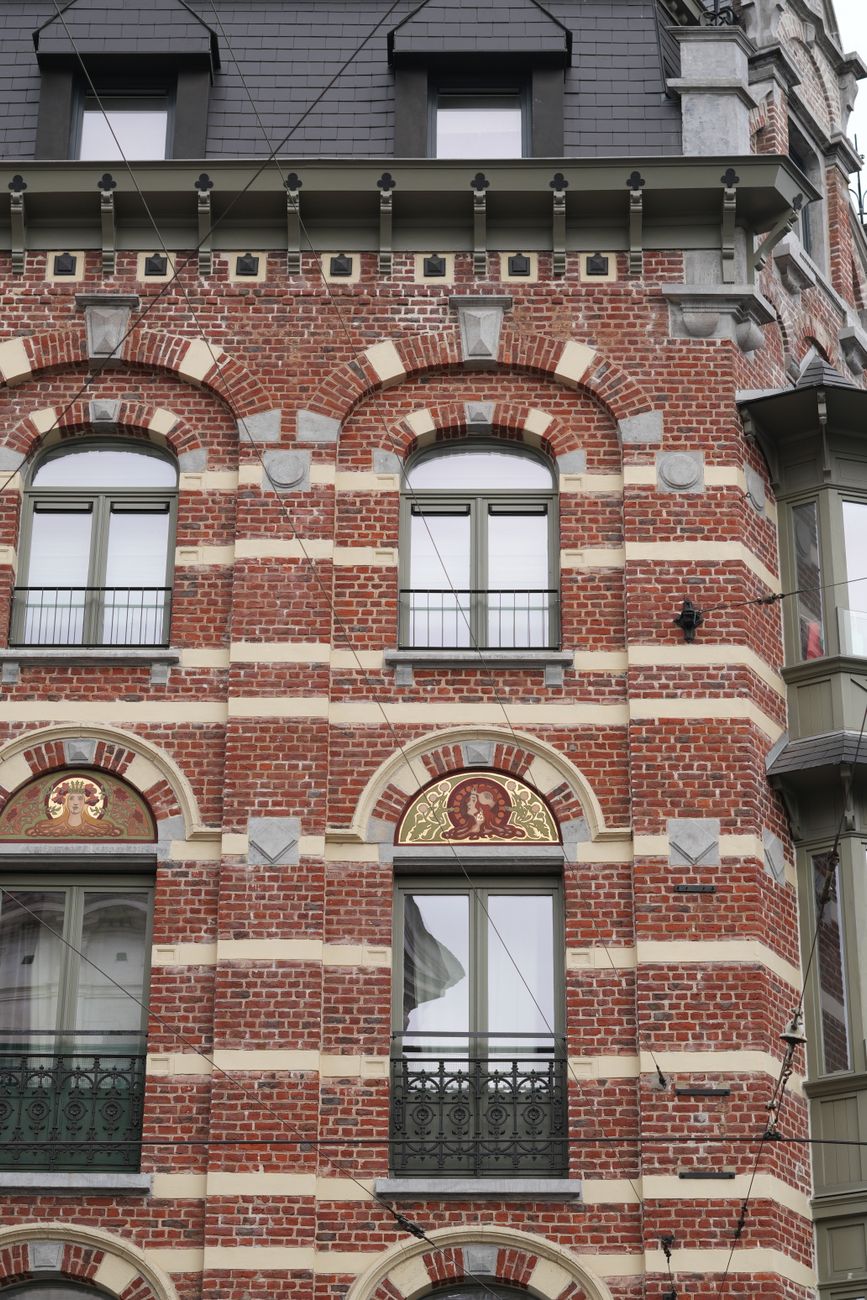
Berkendael, Brugmann and Molière were shaped in the late 19th and early 20th centuries as bourgeois residential districts, with broad avenues, hôtels de maître, apartment buildings, churches, clinics and Art Nouveau, Beaux-Arts and Art Deco architecture. That historic fabric now creates a paradox: the same spacious buildings and prestige that make the area attractive also make projects more sensitive when façades, interiors, gardens or street perspectives are affected.
Impact
Regional — The impact is concentrated in Brussels, especially Ixelles/Elsene and neighbouring Uccle, Saint-Gilles and the City of Brussels around Avenue Louise. It is not a federal housing story, but federal Statbel price data helps explain why the local market is attractive to developers.
Opposing perspectives
- Developers and property owners
Developers and owners argue that converting large houses, obsolete offices or institutional buildings into apartments is a rational response to demand. In high-value streets, expensive energy upgrades, structural work and architectural constraints can be financed because the final units command premium prices. They also point out that reusing existing buildings can add homes without expanding Brussels outward.
- Local residents and heritage groups
Neighbour committees and heritage-minded residents worry that profitable densification can erode what makes these streets desirable: gardens, mature trees, interior courtyards, coherent façades, sunlight and quiet residential character. Their strongest arguments usually focus on planning compatibility, heritage value, mobility, water management and construction nuisance rather than on opposing housing in principle.
- Housing-access advocates
Housing-access advocates see the Ixelles boom as evidence of a wider Brussels imbalance. More homes are needed, but luxury conversions in high-income neighbourhoods do little for middle- and lower-income households unless planning policy also delivers affordable housing, social housing, family-sized units and stronger rental protections.