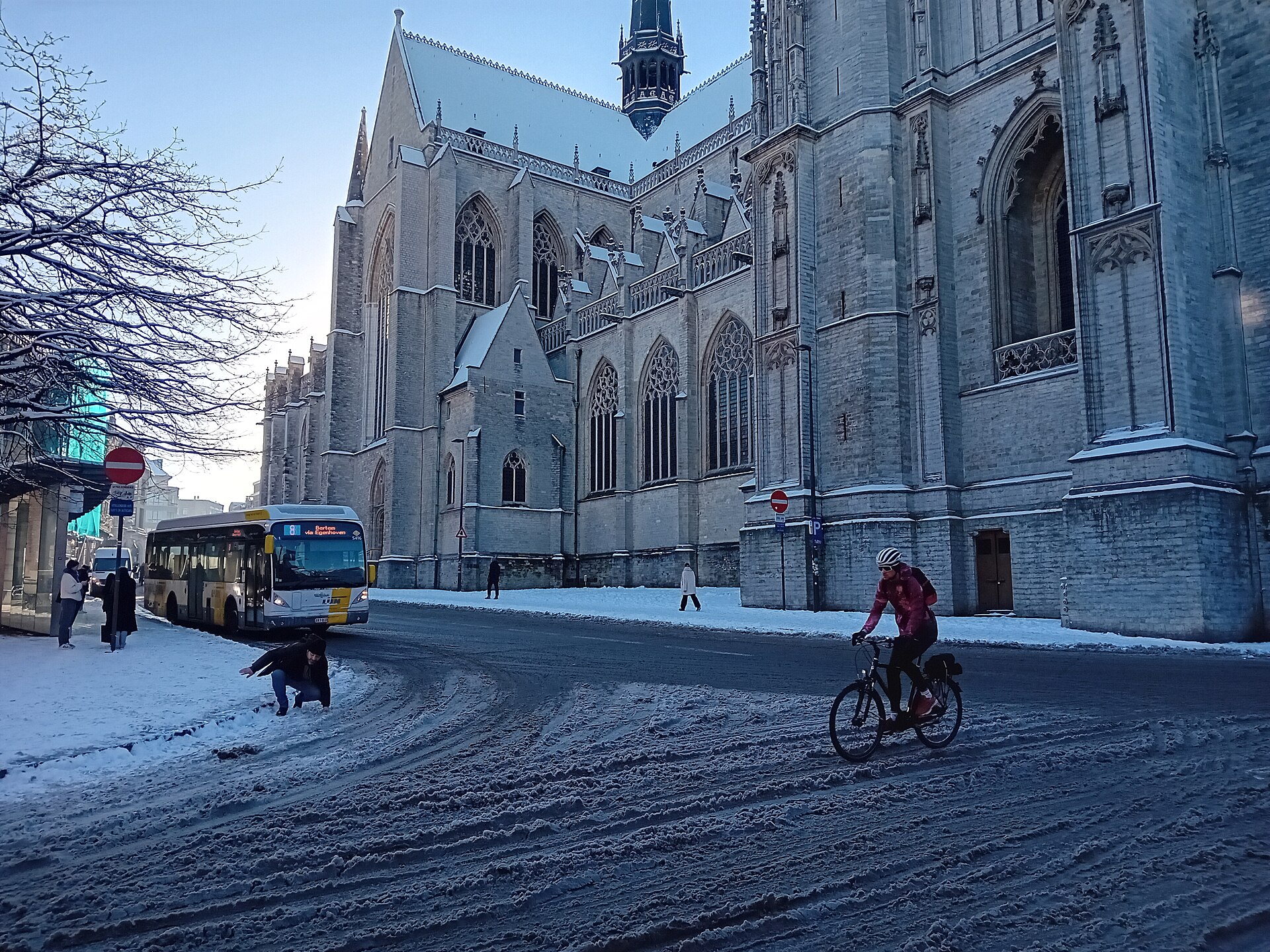
Why is Flanders paying to stabilise Leuven’s Sint-Geertruikerk?
The Flemish Government has granted a subsidy for works intended to stabilise Leuven’s Sint-Geertruikerk, according to Het Nieuwsblad. The intervention centres on pile foundations, a technical but important step when historic masonry and soil conditions make ordinary repairs insufficient. The political point is straightforward: immovable heritage is a Flemish regional competence, so a protected church in Leuven can trigger Flemish funding even when the practical disruption is local and the building’s day-to-day use is religious, cultural and neighbourhood-based. The phrase from the Dutch-language coverage, “paalfunderingen moeten Sint-Geertruikerk stabiliseren: Vlaamse regering kent subsidie toe”, captures the policy logic: stabilise first, restore later. For residents, the question is less ideological than practical: what works will happen, who coordinates them, whether access around Sint-Geertruiabdij is affected, and how public money is being used on a protected monument.
This matters because heritage subsidies are not abstract grants: they decide whether complex, expensive structural works can move from diagnosis to execution. Pile foundations are usually used when a building’s stability depends on deeper load-bearing layers, which means the problem is not cosmetic. For Leuven residents, the visible outcome may be construction traffic, scaffolding, temporary access changes or a longer restoration pathway. For Flemish taxpayers, the case is another example of how the 2024-2029 Flemish legislative cycle must balance heritage protection with budget discipline, church rationalisation and local urban priorities.
The subject is the Sint-Geertruikerk, officially listed by the Flanders Heritage Agency as the Parochiekerk Sint-Geertrui at Sint-Geertruiabdij 10 in Leuven. It is a protected monument and part of the wider Sint-Geertrui abbey setting. The responsible regional political actor is Ben Weyts, Vice-Minister-President of the Flemish Government and Flemish Minister for Budget and Finance, the Flemish Rand, Immovable Heritage and Animal Welfare. Leuven’s municipal authorities, the church fabric and the Flanders Heritage Agency are the likely practical stakeholders in planning, permits, heritage advice and public communication, although the accessible public sources reviewed do not yet provide the full financing table or works calendar.
Background
The Sint-Geertruikerk is not an ordinary parish building. According to the Flanders Heritage Agency inventory, its origins go back to a 12th-century chapel dedicated to Gertrude of Nivelles, with a religious community becoming independent in 1206 and the church functioning as a parish church from 1252. Its west tower and openwork spire are part of Leuven’s Gothic identity, linked in the inventory to Jan van Ruysbroeck. The church was heavily damaged in the Allied bombing of Leuven on 11-12 May 1944 and was reconstructed from 1950, with a re-dedication in 1953. That history explains why present-day stabilisation is politically sensitive: every intervention has to respect layers of medieval fabric, post-war reconstruction and protected-monument status.
Impact
Regional — The impact is concentrated in Leuven, in Flemish Brabant. The site sits in the historic Sint-Geertrui area between the Dijle and Mechelsestraat, close to residential streets and other heritage assets. The subsidy turns a local stability issue into a Flemish policy decision because protected immovable heritage falls under the Flemish Region.
Opposing perspectives
- Flemish Government and heritage administration
The Flemish policy frame is preventive protection: a protected monument with structural problems should be stabilised before deterioration becomes more expensive or irreversible. Under this view, a subsidy is not a favour to one parish but an instrument of regional heritage policy.
- Leuven residents and local taxpayers
The local accountability frame asks what the subsidy means on the ground: traffic, access, timing, co-financing and future use. Residents can support saving a landmark while still expecting clear public information about disruption and the total cost.
- Church fabric and heritage users
For the church fabric and people who use the building, stabilisation is a condition for continued religious, cultural and community use. Their priority is likely continuity: keeping the site safe and usable while respecting the protected character of the monument.
- Secularisation and church-policy planners
A broader policy frame is whether public heritage funding should be tied more explicitly to long-term use plans for historic churches. In Flanders, many church buildings are protected monuments, but regular worship attendance and local church infrastructure needs are changing.