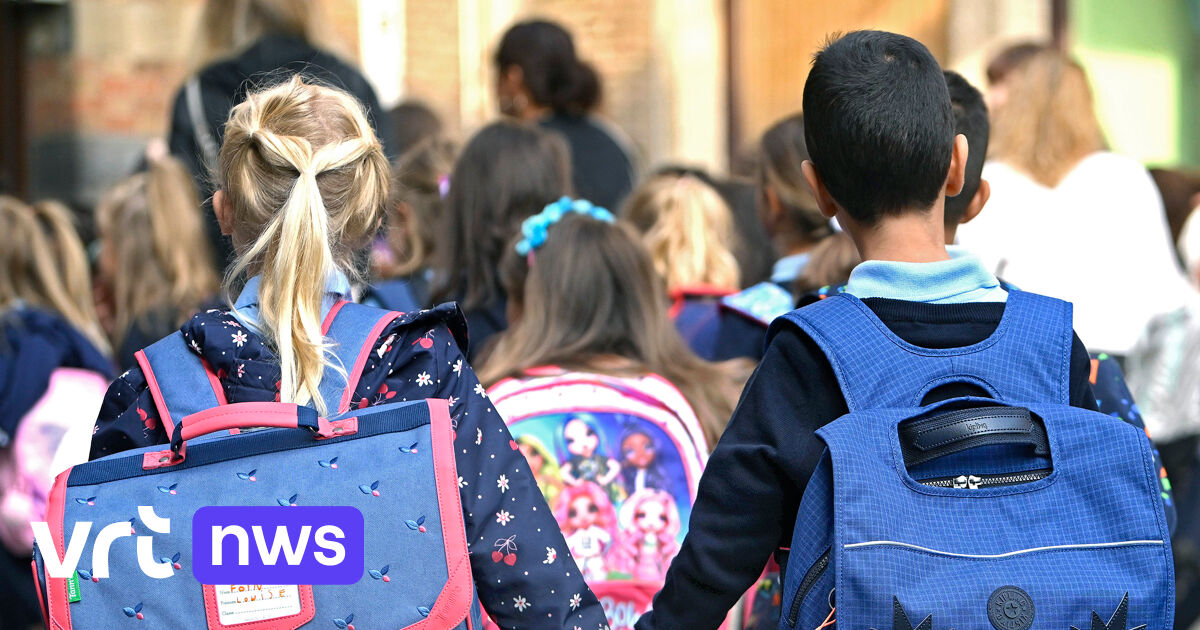
Will Brussels’ €750,000 Connect funding make Dutch-language schools easier for vulnerable families?
Brussels is again setting aside €750,000 for Connect, a Flemish Community Commission project that helps vulnerable families navigate Dutch-language education in the Brussels-Capital Region. The decision matters beyond a single subsidy line: for many Belgium-based parents, including international and EU-institution families who choose local schooling rather than European or private schools, school access in Brussels is not only about language, but also paperwork, trust, unpaid bills, after-school care and knowing whom to call when a child is struggling. The direct target is not the expatriate bubble, however. The centre of gravity is Brussels’ Dutch-language school network, where many children grow up in multilingual households and where poverty can make ordinary school participation difficult. Connect is designed to put support closer to the school gate, so parents do not have to find the right welfare, education or language channel alone.
For parents in Brussels, the practical question is whether support arrives where they already are: at school. A family may need help understanding a school invoice, applying for assistance, arranging language support, contacting a CLB, or keeping a child involved in activities that cost money. For school teams, Connect can reduce the burden of acting as informal social workers without removing the school’s role as the most trusted contact point. For the city, the policy tests whether Dutch-language education can remain accessible in a multilingual, high-poverty capital rather than becoming a system that only well-informed families can navigate confidently.
The story concerns Connect, a VGC-backed initiative in Dutch-language schools in Brussels. VRT NWS reported that Brussels is again freeing €750,000 for vulnerable children in Dutch-language education. The Onderwijscentrum Brussel, the VGC education support centre, says the project is being extended for the 2026-2027 school year and is intended to support parents through their children’s schools, with particular attention to families facing more difficulties. The named institutional stakeholders are the Vlaamse Gemeenschapscommissie, VGC education member Dirk De Smedt, VGC College chair Elke Van den Brandt, the Onderwijscentrum Brussel, school teams, parents, pupils, and organisations working on school costs and poverty such as vzw Krijt.
Background
Dutch-language education in Brussels has long had a dual role: it is part of the Flemish Community’s constitutional responsibility, but it also functions as a local public service in a city where many pupils do not come from Dutch-speaking homes. That makes Brussels different from most of Flanders. Language support, poverty reduction, parent partnership and school capacity are not side issues; they are structural conditions for whether the network works. The VGC’s 2026-2029 agreement explicitly links learning in Brussels with tackling the impact of poverty, school dropout and pressure on school teams.
Impact
Regional — The impact is concentrated in the Brussels-Capital Region, especially in Dutch-language schools serving multilingual and lower-income neighbourhoods. It may be most visible in parent-school contact, referral to support services, school-cost policies and prevention of avoidable disengagement.
Opposing perspectives
- VGC education leadership
Dirk De Smedt’s framing is that Brussels education is a route to equal opportunities, but only if schools receive targeted support where pressure is highest. In this view, Connect is not charity around the edges of education; it is part of making learning conditions workable in a city where language, poverty and family administration often overlap.
- Onderwijscentrum Brussel and school-support professionals
OCB frames the issue from the classroom and parent-contact side. It says children’s language background or socio-economic situation should not be a barrier to a successful school career. That is a more local reading than a generic education-budget story: the problem is not only money, but whether schools can recognise barriers early and work with parents before small problems become absences, debts or disengagement.
- Poverty and school-cost organisations such as vzw Krijt
The poverty-policy perspective puts school costs and unpaid invoices closer to the centre of the debate. From that angle, extra funding is useful only if it changes daily practice: clearer cost policies, prevention before debt, less shame for parents and concrete routes to help. It is a check on announcements that sound generous but do not reach the families least able to navigate systems.
Sources & evidence
- VRT NWS - Brussel maakt weer 750.000 euro vrij voor kwetsbare kinderen in Nederlandstalig onderwijs · 2026-06-11
- Onderwijscentrum Brussel - Connect brengt school en ouders dichter bij elkaar in Brussel · 2026-06-02
- Vlaamse Gemeenschapscommissie - VGC-bestuursakkoord 2026-2029 · 2026-03-10
- Onderwijscentrum Brussel - Omgaan met armoede